Cheese Styles

In September 2026, cheese production returned to Țaga, a small village in Transylvania where cheese has been matured for generations inside a natural cave. The cheese now carries the name Țaga, but its history is closely connected to Năsal, a Romanian cheese once widely known at home and almost completely unknown outside the country.
Năsal’s story reaches back into the nineteenth century and the Schilling family, whose name is closely linked to the cheese’s early production. By the beginning of the twentieth century, the cheese was already established enough to appear in commercial records, and one document from 1918 is particularly revealing.
Năsal has its legend, as so many cheeses with a long history do. Local peasants are said to have stolen curd from a count and hidden it in a cave, only to return some weeks later and find it changed in colour, considerably stronger in smell, but unexpectedly good to eat.
The story has been repeated for generations and has become part of Năsal folklore. But legends remain stories, while the documented history tells us rather more.
During the nineteenth century, the Schilling family owned property at Năsal. János Schilling and later his son Ottó are associated with the development of cheese production there, although the surviving evidence does not allow us to establish exactly when systematic maturation in the cave began.
By Ottó Schilling’s time, however, cheese was certainly being produced and had already built a reputation outside Romania. Historical accounts record a gold medal at the Paris World Expo in 1889, and several decades later the cheese was sold at Gundel in Budapest.
A commercial document published in 1918 gives us something even more concrete. It lists “Noszolyi sajt” (Năsal cheese) and names Schilling Ottó Károly as the producer. More interestingly, it refers to the cheese as being made from whole sheep’s, cow’s or buffalo’s milk.
That single entry says quite a lot. Năsal was by then an identifiable commercial cheese linked to a named producer and the use of buffalo’s milk, which has returned in the current Țaga range, is not a contemporary experiment. It has a documented precedent going back more than a century.
The Schilling property was nationalised in 1948. A small cheese factory was built at Țaga in 1954 and, in the decades that followed, Năsal moved into state-owned production and became much more widely distributed. For generations of Romanian consumers, this was the version of Năsal they came to know.
The later history was less continuous. Production stopped and restarted at different points, ownership changed, and the factory itself went through periods of uncertainty. What remained through all those changes was the cave.
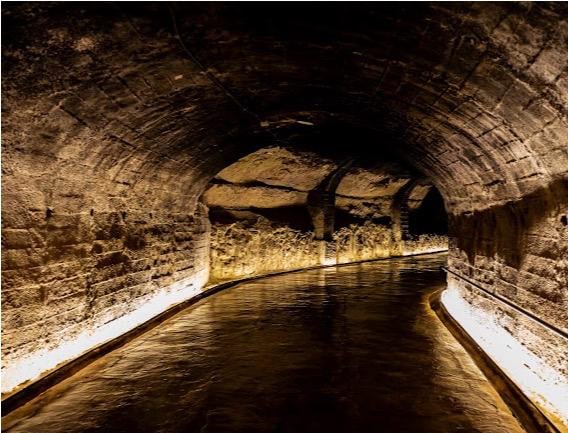 Entrance of the cave. Photo credit: Grota Țaga
In 2026, following new investment in both the production site and the cave, cheese is once again being made and matured at Țaga, now under the Țaga name and in both cow’s and buffalo’s milk versions.
It would be misleading to describe today’s cheese as a replica of nineteenth-century Năsal, or even of the cheese remembered by Romanian consumers from the second half of the twentieth century. Milk sourcing changes. Cheesemaking changes. Cultures, equipment and legislation change. The people making the cheese change too.
What is much more interesting is that cheese is being made here again, and that the cave has returned to the centre of the process.
There is a tendency to speak about historic cheeses as though their value depended on everything having remained unchanged.
Cheese rarely works that way.
A long-lived cheese tradition usually survives through adaptation as much as through repetition. Recipes shift, milk availability changes, techniques are adjusted and production moves through different hands. Sometimes even the name changes. At Țaga, the strongest line connecting past and present is maturation.
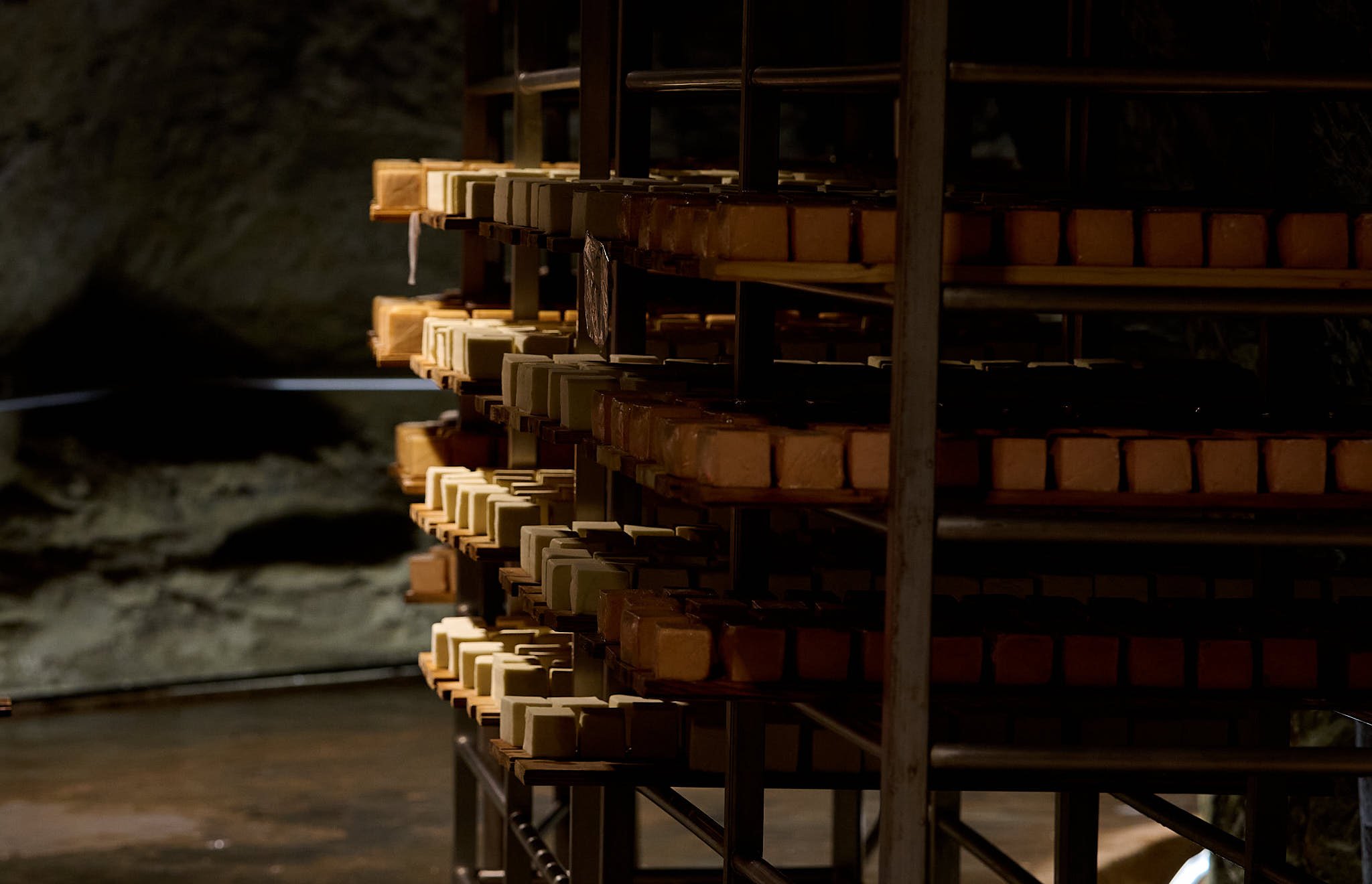 Țaga Cheese of different milk types
The cave has been associated with a surface-ripened cheese for generations. Different milks have been used historically, including buffalo’s milk, and today the cheese once again spends part of its life inside the same natural environment.
But there is another important difference in the current production.
Țaga today is made on an artisan scale, with much of the work still carried out by hand. The cheeses are handled throughout production and maturation, turned, washed, checked and watched as the rind develops and the paste begins to change.
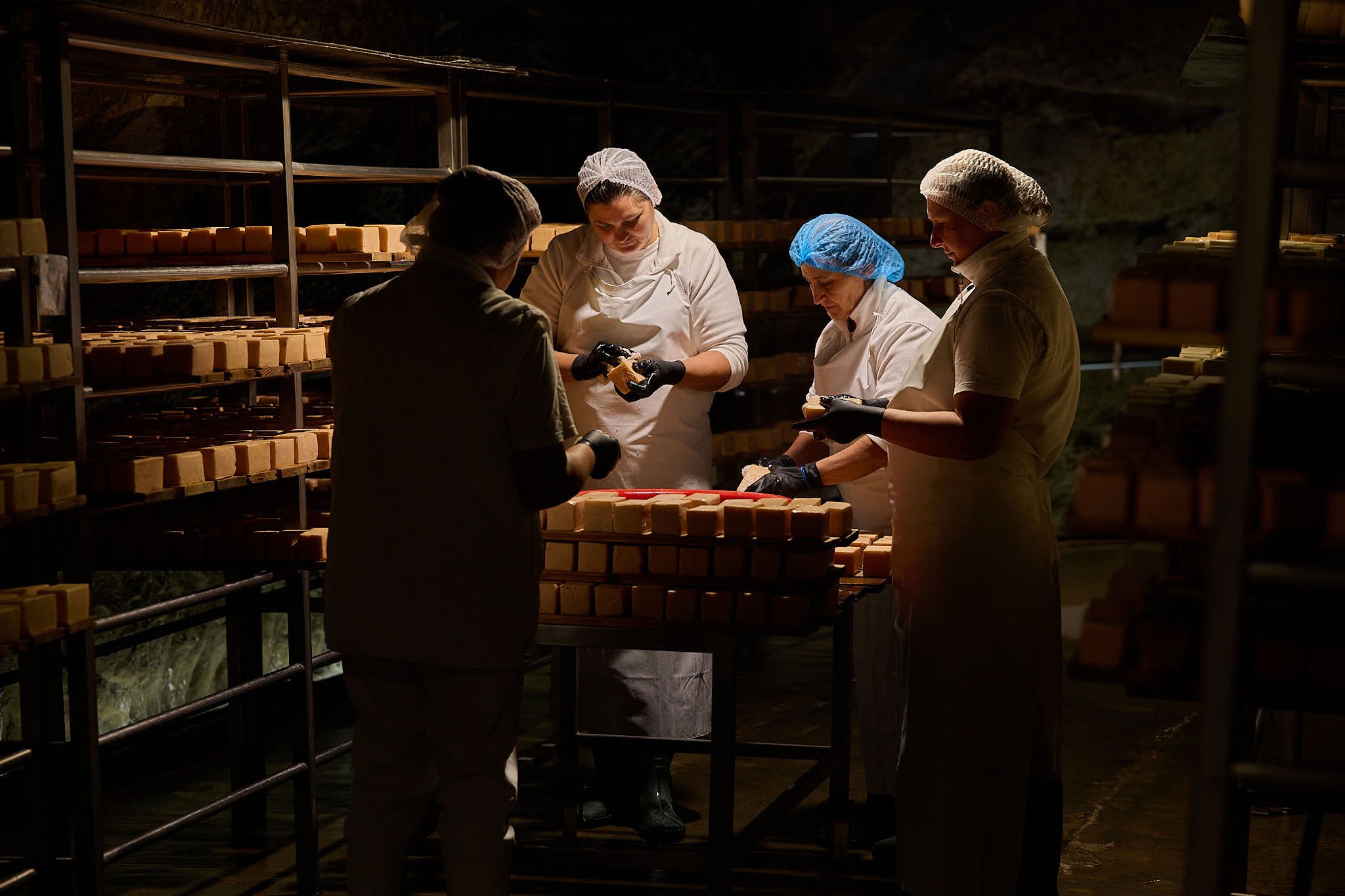 Washing of the Țaga Cheese
In a place where the cave inevitably attracts so much attention, it would be easy to forget the people working with the cheese inside it.
Yet a maturation space does not make cheese by itself.
The conditions may be there, the microorganisms may be there, but someone still has to understand how the cheese is responding to them.
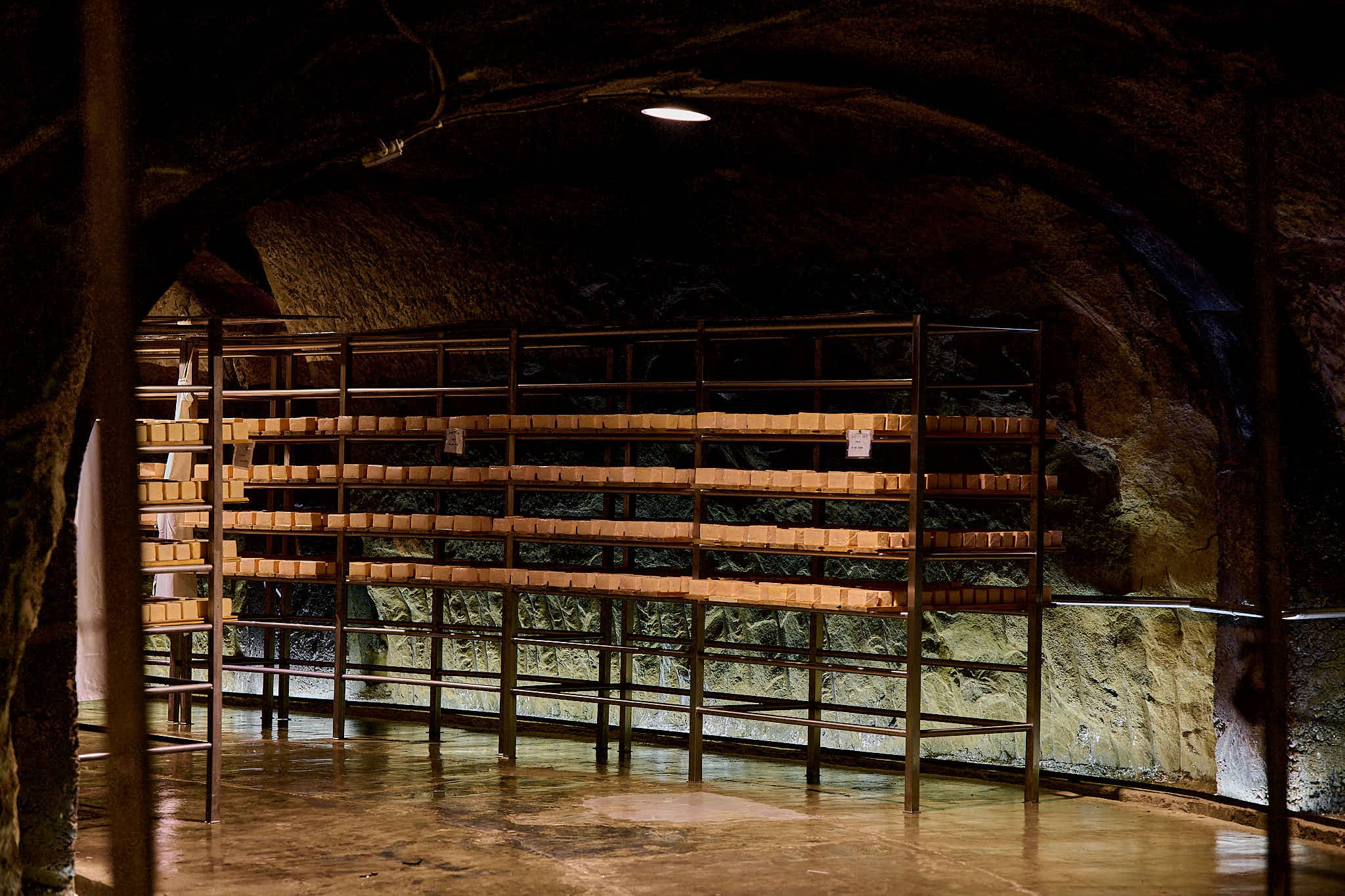
Țaga Cave is approximately 125 metres long. Research carried out on cheese matured there describes temperatures of around 12-14°C and relative humidity of approximately 90–95%, with comparatively little variation throughout the year.
These are naturally favourable conditions for cheese maturation, particularly for a cheese whose rind develops through surface activity. But temperature and humidity alone do not define a maturation space. Air moves through the cave. Moisture settles differently from one area to another. The cheeses are washed and turned. Salt, acidity and moisture influence what develops at the surface. And the cave itself carries a resident microbiota shaped by years of use and by the environment around it.
Research at Țaga has confirmed the natural presence of Brevibacterium linens alongside bacteria including Micrococcus and Corynebacterium. B. linens is familiar to anyone working with washed-rind or smear-ripened cheeses and is by no means unique to Țaga. Here, however, it forms part of the natural microbial environment in which the cheeses mature. It can contribute to rind pigmentation, aroma development and proteolysis, and therefore to changes in texture, but it works alongside other microorganisms and alongside the conditions created by the cheese itself.
And then there are the hands involved in the process.
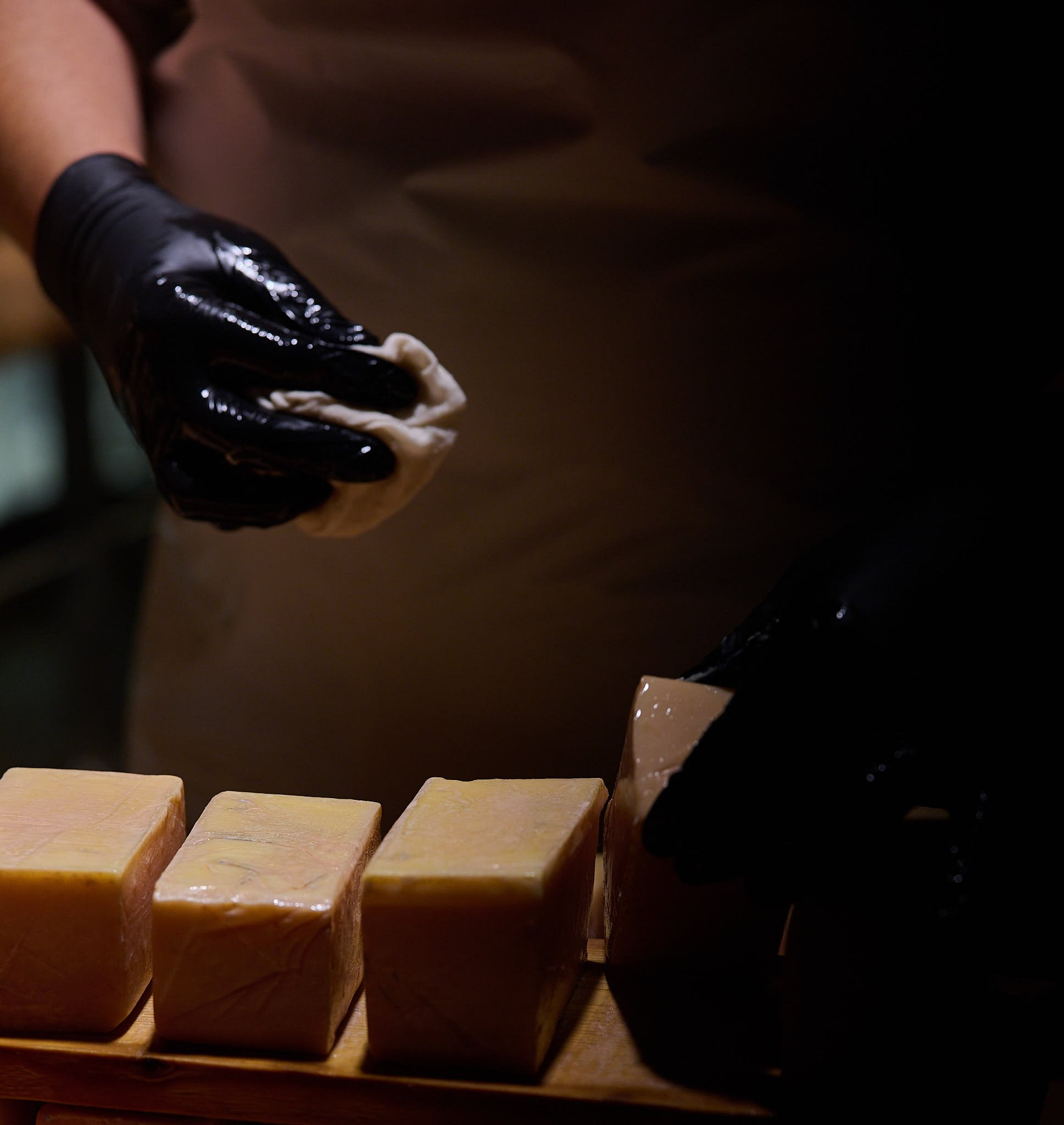 Washing the rind
Turning a cheese, washing its surface and deciding when the rind needs attention are small actions, but they matter. At Țaga, the cheeses do not simply disappear into the cave and emerge several weeks later transformed. That interaction between the cheese, the cave and the people handling it is probably much closer to the reality of Țaga than any attempt to explain its character through one organism alone.
The younger cow’s milk Țaga begins very clearly with dairy aromas.
Clean and lactic, the paste is smooth, with butter coming through easily and the milk returning again and again retronasally. Alongside it are already some of the aromas I associate with the cave itself: earthy notes and a light mineral character.
At this stage the cheese is still relatively simple, and there is something rather comforting about tasting it before maturation becomes more dominant. The milk is still very easy to read.
With more time in the cave, the surface begins to change. The rind develops pink-yellow tones, sometimes unevenly, and can become slightly tacky. The paste softens and becomes creamier, while the flavour moves much further towards the savoury end of the spectrum.
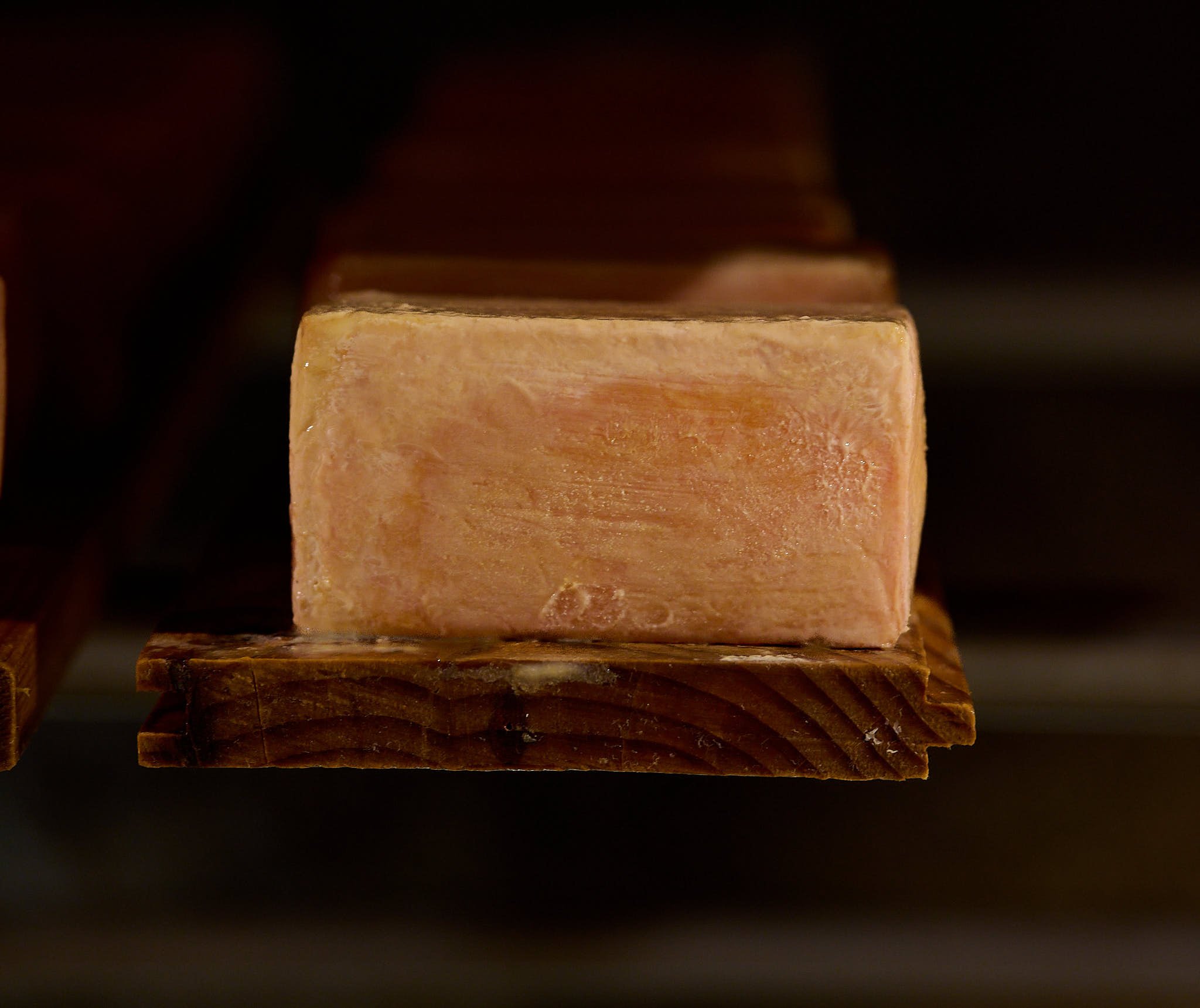
Umami becomes more obvious. The clean milk and butter of the younger cheese give way to deeper flavours, with notes that can move towards bone broth and roast beef.
The rind also becomes more recognisably washed-rind in character. Its aroma can suggest considerably more intensity than you eventually find on the palate, something anyone familiar with this family of cheeses will recognise. The nose may be forthright while the paste remains much gentler and more balanced.
The buffalo’s milk version begins differently.
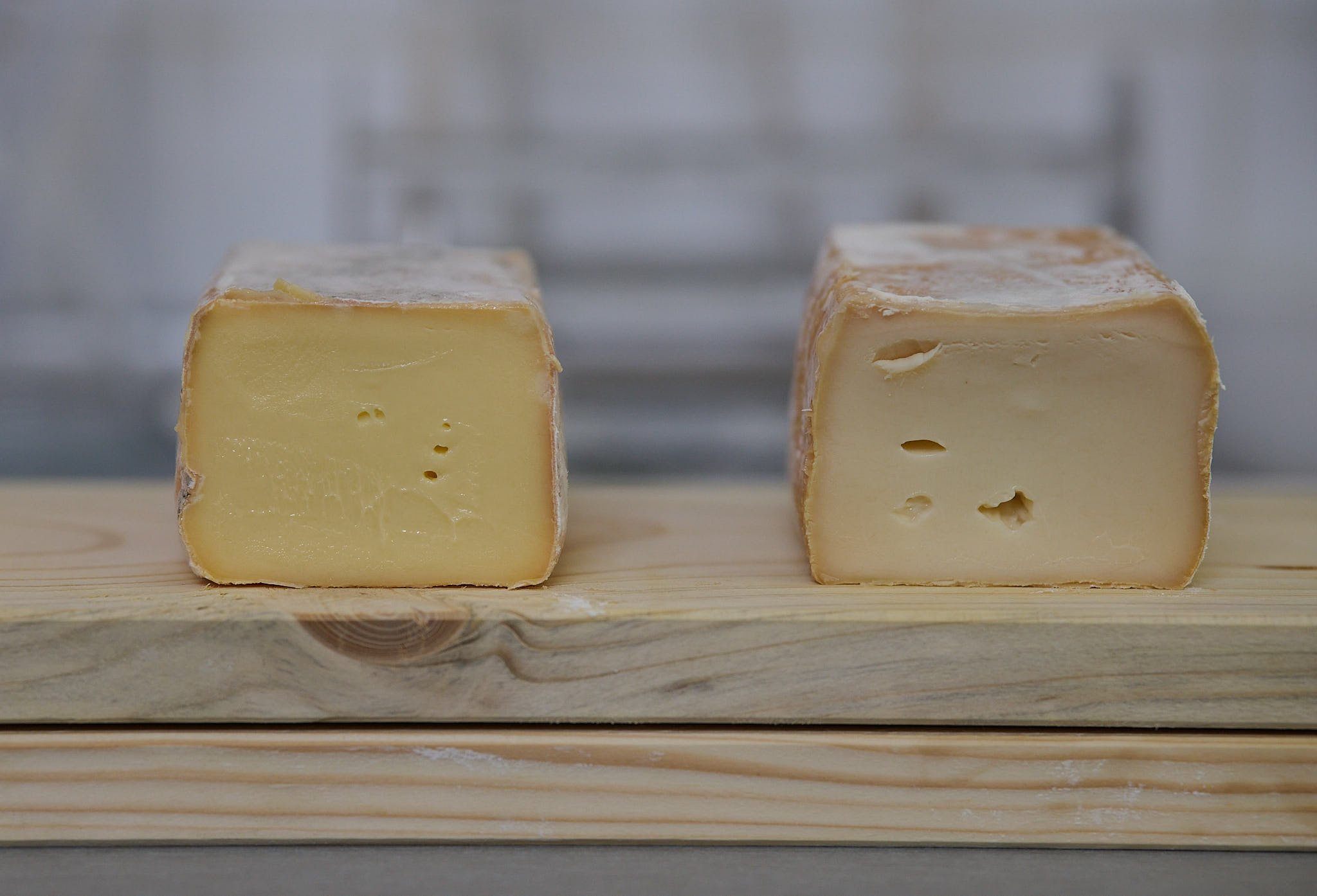 Cows milk Țaga cheese - left; Buffalo milk Țaga cheese - right.
Even when young, there is a more obvious sweetness, together with rich milk and butter. The aromas associated with the cave are already present, but they sit alongside the character of the milk rather than covering it.
As maturation progresses, the paste becomes softer and the profile broadens. Mineral notes appear first, followed again by butter and the sweetness of the buffalo’s milk.
Tasting the cow’s and buffalo’s milk versions at similar stages of maturation is particularly revealing.
They share certain characteristics as they develop: the changing rind, the softer paste, some of the earthy and mineral impressions and the increasing influence of surface ripening. Yet they remain quite clearly different cheeses.
The cow’s milk version moves more readily towards savoury, umami-led flavours, while the buffalo’s milk holds on to more sweetness and richness as it matures.
The cave influences both, but it does not make them alike.
That balance is perhaps what interests me most about the cheeses being made at Țaga now. The cave has a presence, but so does the milk. The rind develops, the paste changes, the aromas deepen, yet the starting point is never completely lost.
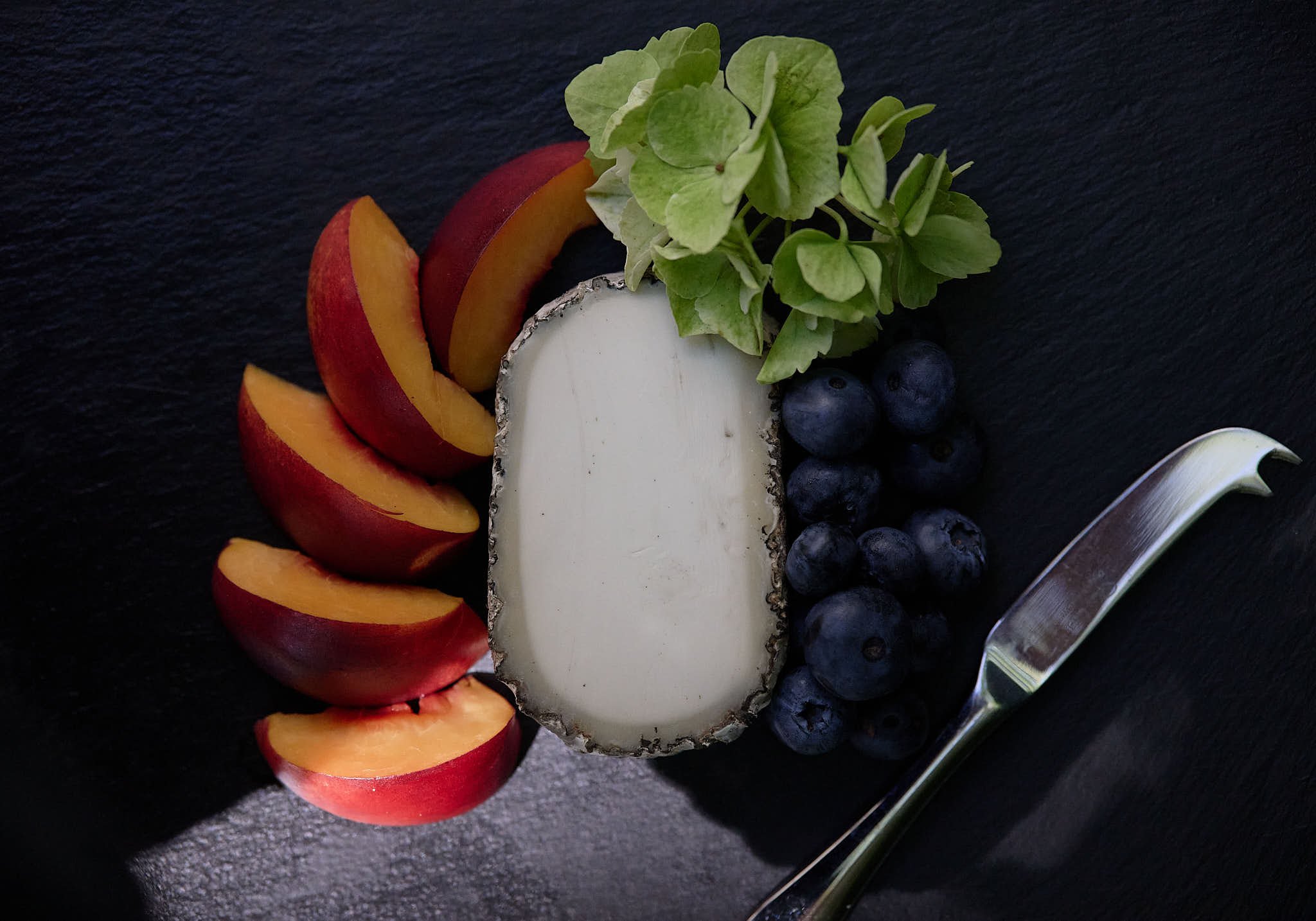
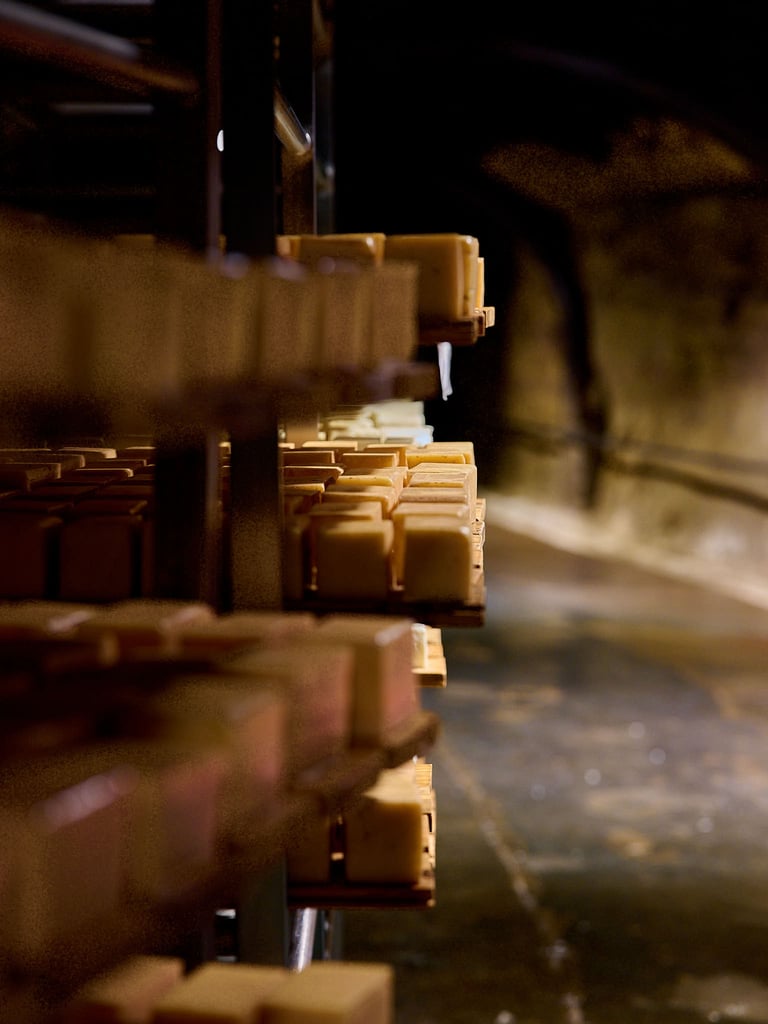 Young Țaga Cheese
There is something particularly satisfying about seeing cow’s and buffalo’s milk cheeses returning to this cave more than a century after both were recorded as part of the Năsal story.
They are not replicas of the cheese made here in the past, nor should they be. They are being made now, on a small scale, by people working by hand and learning how each milk, each rind and each batch responds to the cave.
After so many interruptions in its history, cheese is once again being made at Țaga.
The history gives it roots. What happens next will belong to Țaga itself.